Coming Out of the Shadows: How Karen Carpenter Developed Her Talent
The Challenge
Under one of my posts about talent, a reader posed what looked like a definitive counterexample.
“What about Karen Carpenter?” they wrote. “That voice was simply a gift. You can’t practice your way to that.”
My first instinct wasn’t to argue. It was to investigate. Maybe I’m wrong. Maybe this really is the purest example of inborn talent—a voice so extraordinary that no amount of practice or environment could explain it.
So I started digging. And the first thing I found was the praise.
Paul McCartney called her “the best female voice in the world: melodic, tuneful and distinctive.” [1]
John Lennon, walking into a Los Angeles restaurant, stopped mid-stride just to say: “I want to tell you, love, that you’ve got a fabulous voice.” [2]
Elton John said she had “one of the greatest voices of our lifetime.” [3]
Two Beatles. Elton John. Not casual compliments—declarations. The kind of praise that builds legends.
When giants of music speak like this about someone, it’s easy to conclude the debate is over. This must be pure, undeniable, god-given talent. What else could explain a voice that made McCartney, Lennon, and Elton John pause in awe?
Karen Carpenter. One of the most gifted singers in history. And perhaps the strongest case against everything I’ve written about talent.
Or maybe not.
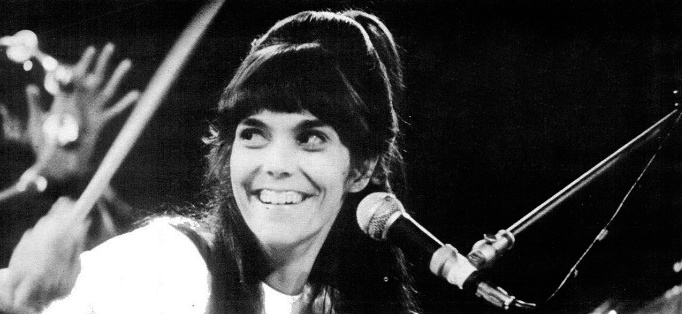
Karen Carpenter behind the kit. A&M publicity photo, 1973. Public domain, via Wikimedia Commons

A Girl in the Shadows

“Lead Sister: The Story of Karen Carpenter” by Lucy O’Brien (Manilla Press, 2023) — the main source for this essay.
Karen’s musical world developed in a basement.
Their father Harold had turned the cellar into a space for the kids—but more importantly, it housed his record collection. Classical, jazz, swing, novelty acts. Everything from Rachmaninov to Spike Jones. For Karen and Richard, this basement was where music lived.
Karen’s brother Richard, four years older, was obsessed with music. He listened constantly, dissecting arrangements, gravitating naturally toward the piano. At eight, he started lessons—though his first teacher was so rigorous he sucked the joy out of playing. Richard quit. Three years later, they found Will, a teacher whose approach clicked. Richard flourished, eventually enrolling at Yale Music School.
The family always saw Richard as the talented one. The one destined to be a musician.
Karen was more in the shadows.
“Richard was the family prodigy and, despite her enthusiasm for music, Karen’s gift wasn’t acknowledged and she was relegated to little sister, following in his shadow.” [4]
She idolised her brother, spending hours with him dancing and listening to records, singing along to melodies. But while Richard was consumed by music, Karen’s world didn’t end there. A self-declared tomboy, she liked baseball, enjoyed wrestling and acrobatics. She experimented with different things—ballet lessons, multiple instruments. Nothing really stuck. She showed no outstanding musical gifts.
And yet, she was always in the vicinity of music. An active listener, absorbing every melody she heard.
Finding the Drums
When Karen was thirteen, the family moved from New Haven to Downey, California. New environment, new opportunities. The move was largely to support Richard’s musical career—more favouritism toward the prodigy. For Karen, it was harder. She was growing into an awkward teenager, reluctant to participate at school. Her obsession with sports waned. It was a tough time.
Richard joined the school band and a jazz group, encouraged by his teachers. Karen wanted to follow her brother. She tried flute. Accordion. Abandoned both.
“While Richard’s musical ambition was steadily progressing, Karen was struggling to find her feet, recalling later that ‘junior high was a waste and I didn’t do much of anything in music until I was sixteen.’” [4]
She was allowed to join the high school marching band, at first given a position banging a mallet on the glockenspiel. After several trials and failures with different instruments, she finally found her place: drums. The first girl in the band playing them.
And something clicked.
In contrast to every other instrument she’d tried, Karen became obsessed with drums. She practiced for hours every day. Drummers like Buddy Rich and Louie Bellson became her heroes—masters of speed and technique. She studied Joe Morello’s cymbal work in the Dave Brubeck band, practicing relentlessly until her fingers were raw, determined to match what she heard on records.
“Finding the drums was, for Karen, a liberation… It was a visceral outlet for those difficult teenage feelings, a way to fully express herself and carve out her own identity. She had the sense of being, as she described it, ‘safe and lost’ while marching on the football field, tuning out any thoughts of fear or anxiety by engrossing herself in the music.” [4]
Two months in, she wanted a full show kit—silver sparkle double floor tom-toms, the whole thing. She had finally found something she loved doing. Something that was hers.
But singing? That came later. And the first attempts were disappointing.
“Karen wanted to try singing. Her high-school friend Corey Christensen had a band called Knights of the Sun who were looking for a vocalist, so she auditioned. She didn’t get the job and was told that she couldn’t sing. The sweet irony of that was not lost on Christensen when, five years later, the Carpenters became famous.” [4]
In the mid-1960s, Karen had yet to discover her deeper voice. “I used to sing in this upper voice and I didn’t like it,” she said. “I was uncomfortable.” [4]
She decided to stick to the drums, joining an all-girl surf band.
The tipping point came later, when she met Frank Pooler.
The Voice
Richard was searching for a voice.
He had compositions, arrangements, a clear vision for the sound he wanted. What he needed was someone who could deliver it. He introduced Karen to his choir director at Cal State Long Beach—a man named Frank Pooler.
It was a turning point.
“Behind every great artist there is the unsigned manuscript of a great teacher, and Frank Pooler was that teacher.” [4]
Pooler was both terrifying and nurturing. On Saturday mornings, he taught Karen classical lieder—Beethoven, Schumann—while also letting her sing pop, pushing her to expand her range. As her confidence grew, Richard began coaxing her to sing lead while still playing drums.
Many assume Karen’s voice emerged fully formed. It didn’t. What we hear in the Carpenters’ sound carries Pooler’s fingerprints everywhere.
He favored a tone that was straight, without much vibrato, pitched slightly high. “Being sharp is a little bit arrogant,” he’d say. He demanded brightness—warm-ups focused on vowels that rang clear and cut through. That signature Carpenters sound, the unified background vocals, the precision? That came from Frank.
Pooler himself analyzed their technique in a 1973 article for the Choral Journal, praising their “knife-edged, razor sharp” vowel pronunciation—vocal control that created “an absolutely unified sound… from a soft to a dynamic level.” [4]
Karen was enthralled. She followed Richard to Cal State to study music, largely because of Pooler’s teaching. Academic study didn’t hold her attention—she skipped classes and was eventually suspended in 1968. But Pooler’s lessons stuck.
“Frank Pooler is a genius with vocals, just a genius. There are certain choirs where you have eighty people and it sounds like eighty people yelling… but Pooler’s thing is to make eighty sound like one.” [4]
She absorbed everything he offered: the varied repertoire, the precise pitching, the complex harmonics, the strength of voice. Her time at Cal State was short, but formative. The raw material was there. Pooler helped shape it into something extraordinary.
The voice was forming. But what was driving it?
Immersion and Identity
Alain de Botton, in conversation with Chris Williamson, described talent as something built from scattered elements. Not a gift you unwrap, but fragments you gather. The question isn’t “What am I talented at?” but “How do I want to express myself in the world?”
Your true self, de Botton suggests, is shattered—and needs to be found and assembled.
For Karen Carpenter, the answer was music. Drums first, then singing. But she didn’t arrive there quickly. She searched for years—ballet, baseball, glockenspiel, flute, accordion—before something finally fit.
Talent development, in her case, was a byproduct. The primary work was building an identity. Finding her way in the world.
I don’t believe we’re wired for specific destinations. But abilities and temperament do drag us toward certain activities. Near those activities, we feel closer to our vision of ourselves. In that sense, we have predispositions—not fixed fates, but gravitational pulls.
And yet, I also believe that the right context can switch the path. Rewire initial settings. Karen’s story shows both sides of this.
When she found drums, she found herself. The instrument wasn’t just something she played—it was how she expressed who she was. Behind the kit, she felt safe. Independent. Whole.
But as the Carpenters rose—hit after hit climbing the Billboard charts, a Grammy Award, global recognition—the pressure mounted. It came from managers, from the industry, from the logic of marketability. A woman behind the drums didn’t fit the image. A frontwoman—vulnerable, visible, center stage—that was what sold records. Karen was pushed to leave the drums and focus on singing.
“Karen, however, was deeply reluctant to abandon the drums; they were part of her persona, her primary means of expression as a musician.” [4]
In her insecurity, she read the message as: I’m not good enough as an instrumentalist.
For someone who had built her identity around that instrument—who felt “safe and lost” behind the kit—this was more than a career adjustment. It was an unraveling.
Without drums, Karen felt insecure. The frontwoman role never fit comfortably. She had found her way to express herself, and now she was being asked to abandon it for something more sellable.
What Her Story Teaches Us
When you listen to Karen Carpenter, you hear the end product. The voice that made Paul McCartney and John Lennon pause. The sound that seems to arrive fully formed, effortless, divine.
You don’t see the path.
A girl in her brother’s shadow. Years of trying instruments that didn’t fit. A failed singing audition. Thousands of hours behind a drum kit. A choir teacher who spotted something others missed. And underneath it all, a relentless need to express herself through music.
We are structurally unable to imagine the process beneath the outcome we see. When we witness something extraordinary, we assume it was always there—waiting to emerge, inevitable, destined. An inner gift working its magic.
But nobody looking at fifteen-year-old Karen saw a future genius. That label was reserved for Richard. The greatness we see now wasn’t predictable then.
This is the trap of retrospective analysis. From hindsight, one can say Karen had a specific essence, a unique gift. And that’s probably true—she was unique. But it’s an analysis that only works backwards. We bend facts, forget failures, and see the life through the lens of eventual success.
The prospective view looked completely different.
And this matters. Because the question we actually face—”Should I persist in this domain?”—is always prospective. We don’t get to know the ending before we write the story. We need a framework for decisions made in uncertainty, not explanations constructed after the fact.
So what does Karen’s story actually teach us?
Environment matters, but it’s not enough. Karen was surrounded by music from early childhood. Records in the basement. A brother obsessed with piano. Constant exposure to melodies and arrangements. This environment created possibilities—but it didn’t guarantee anything. Lots of people grow up around music and never develop. You need to accept the environment, enjoy it somehow, feel it making you grow.
Trial and error is the path, not the obstacle. Karen tried many things before something stuck. She failed a singing audition. She spent years as a drummer before anyone recognized her voice. We idealize talent as a passage of successes. Usually the opposite is true—a sequence of failures treated as information, directing further progress.
The driving force is powerful. What made Karen different wasn’t a gift handed to her. It was her need to express herself through music. This inner drive kept her immersed, practicing, searching. In my previous post, I described talent as a loop—enjoyment leads to practice, practice builds competence, competence creates confidence, confidence deepens enjoyment. But what ignites that loop? Often, it’s exactly this: a deep need to express yourself through a craft. The question isn’t whether you have talent—it’s whether you can discover or create the drive that keeps you obsessed. And that’s not magic. It’s temperament, character, and life experience colliding in the right way.
Stay in the game and keep probing. Karen tried many instruments, but she never left the music world. She stayed close to the domain, gathering feedback, adjusting. Like children raised in houses full of books who become readers—not because of genes, but because reading is simply part of their environment. Proximity matters. Persistence within that proximity matters more.
Scaffolding from the right people can change everything. Frank Pooler heard something in Karen that others missed. Richard created opportunities for her voice to emerge. Sometimes you need someone else to see your potential before you can see it yourself. Sometimes you need the right context to click.
When you read comments under Carpenters songs, people underscore Karen’s unique and beautiful voice. It must be a gift, they say. It must be inborn.
But she put immense work into making it sound that way.
Natural abilities were there—I don’t want to deny that. But for me, the crucial elements were different: the constant immersion in music from her earliest days, the self-driving force to express herself, the trial and error that eventually landed on drums and then voice, and the people who helped her find what was already forming inside her.
Karen Carpenter came out of the shadows—but not from nowhere.
Postscript
Sometimes the very traits that drive success become the source of destruction.
Karen’s perfectionism, her relentless drive, her need to express herself flawlessly—these qualities shaped her extraordinary voice. But they also turned inward. The same striving for perfection that made her rehearse until every note was right made her scrutinize her own body with devastating intensity.
She developed anorexia nervosa. The disease consumed her throughout her years of fame, hidden behind the spotlight, worsening even as the Carpenters dominated the charts.
On February 4, 1983, Karen Carpenter died of heart failure caused by her illness. She was thirty-two years old.
Her potential was never fully realized. The voice that McCartney called the best in the world was silenced far too early. We’re left with what she created in barely a decade of recording—and the haunting question of what more she might have become.
The same intensity that builds greatness can destroy the person who carries it. Karen’s story isn’t just about how talent develops. It’s also a reminder that the forces driving us forward don’t always know when to stop.
References
[1] NPR, “Remembering Karen Carpenter, 30 Years Later” (2013) - https://www.npr.org/2013/02/04/171080334/remembering-karen-carpenter-30-years-later
[2] BBC documentary “Only Yesterday: The Carpenters Story”, recounted in Far Out Magazine - https://faroutmagazine.co.uk/the-singer-paul-mccartney-called-the-best-female-voice-in-the-world/
[3] Wikipedia, “Karen Carpenter” - https://en.wikipedia.org/wiki/Karen_Carpenter
[4] Lucy O’Brien, “Lead Sister: The Story of Karen Carpenter” (2023)